产品
Home /

偏振光学元件

/非偏振分光棱镜(NPBS)

非偏振分光棱镜(NPBS)

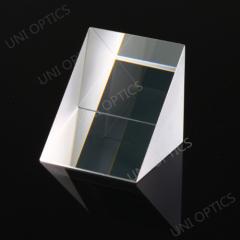
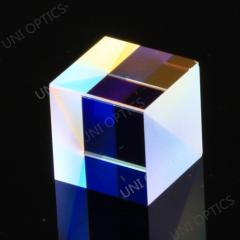
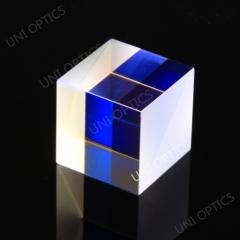
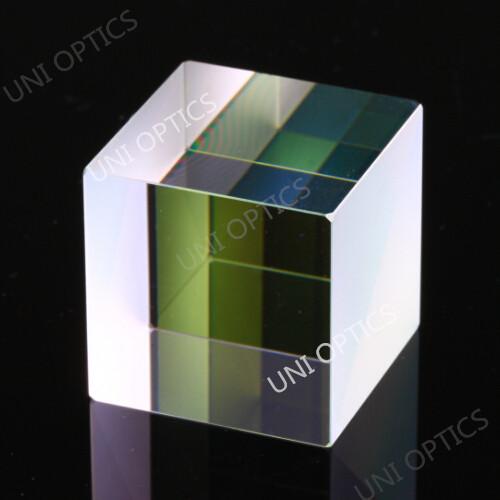
非偏振分光棱镜(NPBS)也称为NPBS立体分光镜,是一种更复杂的类型,由两个直角棱镜组成,它们在斜边面处被固定一起。一个棱镜的胶合面有镀膜,在胶合之前,镀有所需反射性能的金属介质膜,具有特定的反射百分比和颜色。镀膜吸收损耗最小,透过率与反射率可设为10%、20%、30%、40%、50%等。


  • 产品产地:

    中国
  • 航运港口:

    中国福州
  • 交付周期:

    四周
  • 付款:

    银行电汇, 西联付款
立即查询
  • 描述


1.什么是非偏振分光棱镜(NPBS)

非偏振分光棱镜是由一对精密高公差直角棱镜和其中一个棱镜斜边上的金属介质膜胶合在一起构成。其低偏振是依赖于金属介质膜层使得S和P偏振光的透射率和反射率彼此之间的误差在5%以内。这意味着它们不会改变入射光的偏振状态。我们提供宽带和单波长消偏振分光棱镜(NPBS)。为了在适当的波长范围内产生最大的透过率,在分光棱镜的每一面都镀增透膜。

2. 非偏振分光棱镜(NPBS)是如何起作用的?

这些分光镜以最小的敏感度分散能量,入射光束和反射光束的偏振态基本相同。宽带消偏振分光棱镜混合镀膜具有一定吸收能力,但偏振灵敏度最低。由于混合镀膜层的金属性质,这些立体分光镜不适用于高功率激光器。


产品规格


材质:N-SF2 A级光学玻璃

尺寸公差:+/-0.2mm

平整度:λ/4@633nm

光束公差:最小3弧分

表面质量:60-40 S/D

主透过率:tp>95%,ts<1%

主反射比:Rs>99%,Rp<5%

镀膜:斜边面宽带偏振分光镀膜

所有输入和输出面BBAR镀膜


Standard
Wavelength(nm)
450-680, 650-850, 900-1200, 1250-1570, 1500-1610 nm
Size (mm) 3.2x3.2x3.2 5x5x5 10x10x10 12.7x12.7x12.7 15x15x15 20x20x20
Part NO. UBPBS032 UBPBS005 UBPBS010 UBPBS127 UBPBS015 UBPBS020
 
Note: Other sizes, split ratio and coating are available upon request.


发送消息
如果您在使用本网站或我们的产品时有任何问题,请写下您的意见或建议,我们将尽快回答您的问题!感谢您的关注!
如果您有任何问题或建议,请给我们留言,我们会尽快回复您!
相关产品
分光片
可见光和近红外光分光片

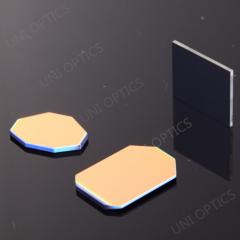
我们的分光板可用于高功率激光系统。在使用分光板时,两个光束在不同的光路中传输,光路取决于入射角和板的厚度。
高精度分光棱镜
宽带偏振立体分光棱镜

立体分光棱镜由胶合的两个直角棱镜构成。一棱镜的斜边镀有偏振介质膜

偏振分光棱镜
偏振分光棱镜

偏振分光棱镜由两个直角棱镜胶合而成,其中一个棱镜的斜面镀有偏振介质膜。当与正常入射、非偏振光一起使用时,入射光被分成两束偏振光,P偏振光可直接穿过,S偏振光以90°角反射出来。

微型元件锥透镜
3mm直径镀铝膜锥透镜

锥形透镜是圆柱形棒透镜,其一端加工成锥形表面。 通常研磨杆的圆周,而抛光锥形表面。

硒化锌窗口片
红外硒化锌窗口片
砷化锌(ZnSe)广泛用于红外元件,有红外窗口和透镜。产品主要应用于热成像,FLIR,医疗系统和二氧化碳激光器等。
IR Optics material
红外材料

1.  Germanium (Ge)


Germanium (Ge) is the preferred lens and window material for high performance infrared imaging systems in the 8–12 μm wavelength band. Its high refractive index makes Ge ideal for low power imaging systems because of minimum surface curvature. Chromatic aberration is small, often eliminating the need for correction.


Crystallographic properties
Syngony Cubic
Crystal Form Poly or Single Crystal
Lattice Constant 5.66
Cleavability <111>, non-perfect
Molecular Weight 72.6
Physical properties
Density, at 20 °C 5.33
Hardness, Mohs 6.3
Dielectric Constant for 9.37 × 10⁹ Hz at 300 K 16.6
Melting 937
Thermal Conductivity, W/m·K at at 293 K 59
Thermal Expansion, 1/K at 298 K 6.1 × 10⁻⁶
Specific Heat Capacity, J/(kgK) at 273-373 K 0.074
Bandgap, eV 0.67
Knoop Hardness, kg/mm2 800
Youngs Modulus, Gpa 102.66
Shear Modulus, GPa 67.04
Bulk Modulus, GPa 77.86
Debye Temperature, K 370
Poissons Ratio 0.278
Elastic Coefficient C11=129, C12=48.3, C44=67.1
Apparent Elastic Limit 89.6 MPa (13000psi)
Chemical properties
Solubility in water None
Solubility in acids Soluble
Molecular Weight 72.59

2. Silicon (Si) 


Silicon (Si) is grown by Czochralski pulling techniques (CZ) and contains some oxygen that causes an absorption band at 9 microns.To avoid this, material can be prepared by a Float-Zone (FZ) process. Optical silicon is generally lightly doped (5 to 40 ohm cm) for best transmission above 10 microns, and doping is usually boron (P-type) and phosphorus (N-type). After doping silicon has a further pass band: 30 to 100 microns which is effective only in very high resistivity uncompensated material.
 
CZ Silicon is commonly used as substrate material for infrared reflectors and windows in the 1.5-8 micron region. The strong absorption band at 9 microns makes it unsuitable for CO2 laser transmission applications, but it is frequently used for laser mirrors because of its high thermal conductivity and low density. Application as window, lens in the 1.5 - 8 um region; Mirror for CO2 laser and spectrometer applications.
 

Crystallographic properties
Syngony Cubic
Lattice Constant, A 5.43
Physical properties
Density 2.33g/cm3
Hardness, Mohs 7
Dielectric Constant for 9.37 x 10⁹ Hz 13
Melting point, оС 1414
Thermal Conductivity, W/m·K at 313 K 163
Thermal Expansion, 1/K at 293 K 2.6x10⁻⁶
Specific Heat Capacity, J/(kg°C) 712.8
Bandgap, eV 1.1
Knoop Hardness, kg/mm2 1100
Youngs Modulus, Gpa 130.91
Shear Modulus, GPan 79.92
Bulk Modulus, GPa 101.97
Debye Temperature, K 640
Poissons Ratio 0.28
Chemical properties
Solubility in water None
Molecular Weight 28.09

3、ZnS material:


ZnS MultiSpectral Under intense heat and pressure, defects within the crystalline lattice are virtually eliminated, leaving a water-clear material with minimal scatter and high transmission characteristics from 0.4 to 12 microns. This material is particularly well suited for high-performance common aperture systems that must perform across a broad wavelength spectrum.

Specifications:

Material: ZnS MultiSpectral
Diameter Tolerance: --------------------- +0.0, -0.1mm
Thickness Tolerance: -------------------- ±0.1mm
Clear Aperture: ---------------------------->85%
Parallelism: -----------------------------------3 arc minute
Surface Quality: ----------------------------80-50 scratch and dig
Wavefront Distortion: -------------------- λ /2 per 25mm @633mm
Bevel: -----------------------------------------Protective  (<0.2mm x 45° )
Coating: -------------------------------------- Optional (Uncoated, AR Coating, etc.)


4. ZnSe material


ZnSe is a preferred material for lenses, windows, output couplers and beam expanders for its low absorptivity at infrared wavelengths and its visible transmission. For high-power applications, it’s critical that the material bulk absorption and internal defect structure be carefully controlled, that minimum-damage polishing technology be employed, and the highest quality optical thin-film coatings are used. The material absorption is verified by CO2 laser vacuum calorimetry. Our quality assurance department provides testing and specific optics certification on request.

ZnSe is non-hygroscopic and chemically stable, unless treated with strong acids. It’s safe to use in most industrial field, and laboratory environments.


强脉冲滤光片
IPL滤光片

IPL滤光片是IPL(强脉冲光)机器的关键光学元件,可阻挡紫外波,并为激光设备传输400nm1200nm的有用波,如光子嫩肤脱毛血管和痤疮治疗皮肤再生


鍺窗口片
红外窗口片鍺窗口片
锗是8-12微米波段高性能红外成像系统的首选镜头和窗口材料。其高折射率使Ge成为低功率成像系统的理想选择。色差很小,通常不需要校正。
融石英楔角棱镜
N-BK7和融石英楔角棱镜

棱镜是一种具有平面倾斜面的光学元件,通常各面以很小的角度相互倾斜,它将光线转向较厚的部分通常可以用作隔离元件。楔角棱镜也可以用来产生一个小偏差,不允许光线返回源。

镀增透膜BK7直角棱镜
镀宽带增透膜的斜边直角棱镜

直角棱镜通常用于改变光路,或用于将光束重新定向90°。直角棱镜是设计成90°角的棱镜,根据棱镜的方向产生倒置或反转的左手图像,同时使用两个直角棱镜是理想的使图像或光束位移的应用这些棱镜也被称为镜像反射棱镜

分光五角棱镜
镀氟化钙的分光五角棱镜

分光五角棱镜是通过在棱镜其中一个倾斜面上添加一个楔,并加上部分反射涂层,可以将五角棱镜用作分光镜,透过率/反射率(T/R)比为50/50,其他比例的分光五角棱镜也能根据您的要求定制。

激光窗片
高功率激光窗片


1.什么是激光窗片


激光防护窗,也称为激光防护玻璃、防护滤光片或焊接防护窗,主要应用于保护高成本的激光光学元件,以节省资金。


2.激光窗的主要用途是什么?


这些窗口片通常用于激光切割、激光焊接等设备上,用以避免高精度的激光光学器件因加工时材料飞溅而造成的损坏。


3.优恩立激光窗口片的主要优势


高传输率

高损伤阈值

低散射

低吸收

优良的膜层密度

良好的环境稳定性


Laser Windows   Laser Windows


常规规格:


尺寸:4-80毫米,圆形或方形

材质:BK7、熔融石英、ZnSe

表面质量:10/5

面型:lambda/10@632.8nm

平行度:30''

粗糙度:3A

订阅我们的通讯
联系
请求免费报价
如果您在使用本网站或我们的产品时有任何问题,请写下您的意见或建议,我们将尽快回答您的问题!感谢您的关注!

版权 © 福州优恩立光电科技有限公司 © 保留所有权利.

留言

首页

产品

公司

联系